



Massive Music Takes the Global Stage at IMPF’s 2025 Conference in Greece
Copyright and Catalogue Readiness in a Digital Music Industry
Summary
Physical formats, downloads and streaming give listeners different ways to access music. For songwriters, accurate credits, shares and rights information help keep works identifiable and ready for publishing administration.
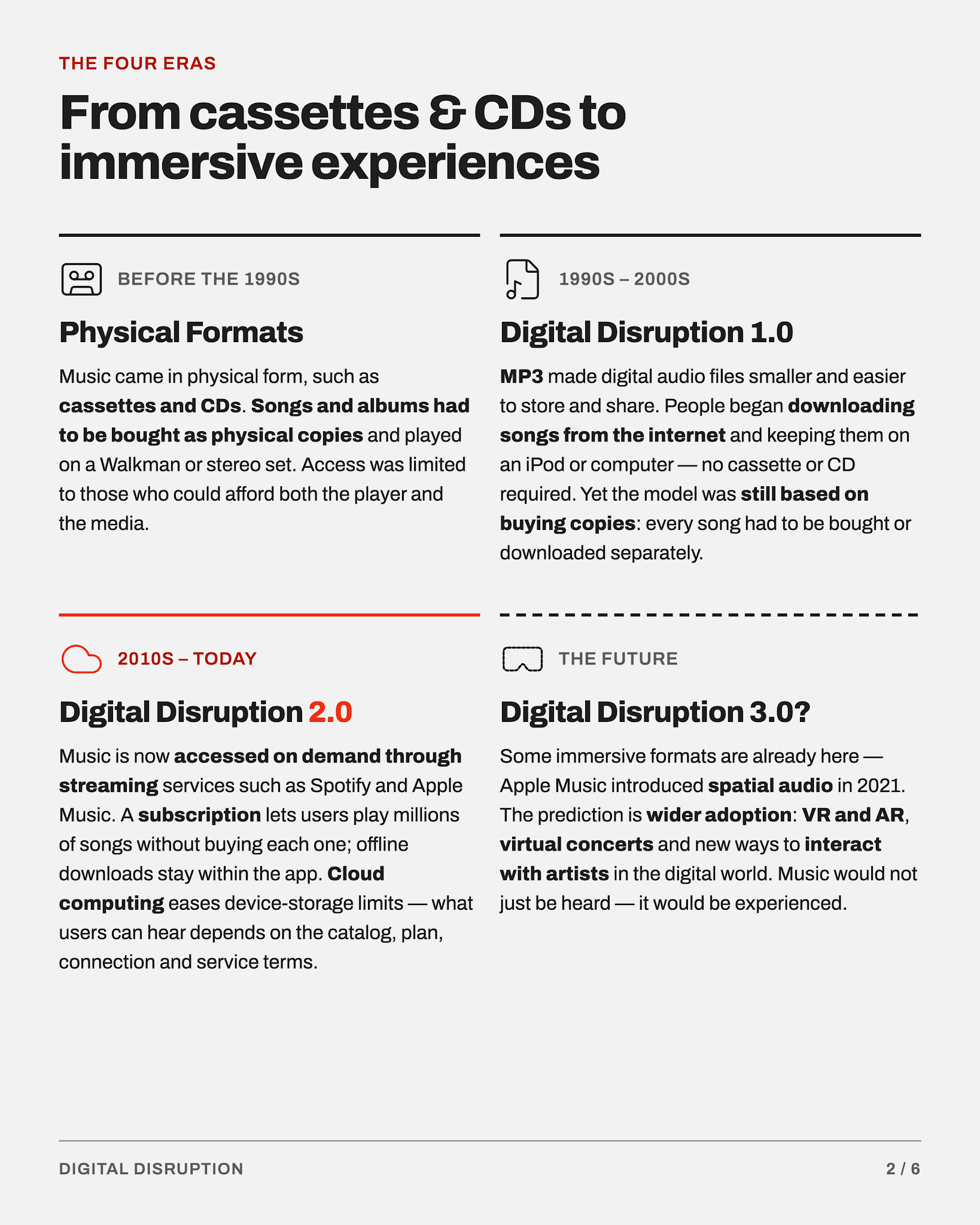
Music is available through physical formats, digital downloads and streaming services. These formats coexist and involve different ways of using works and recordings.
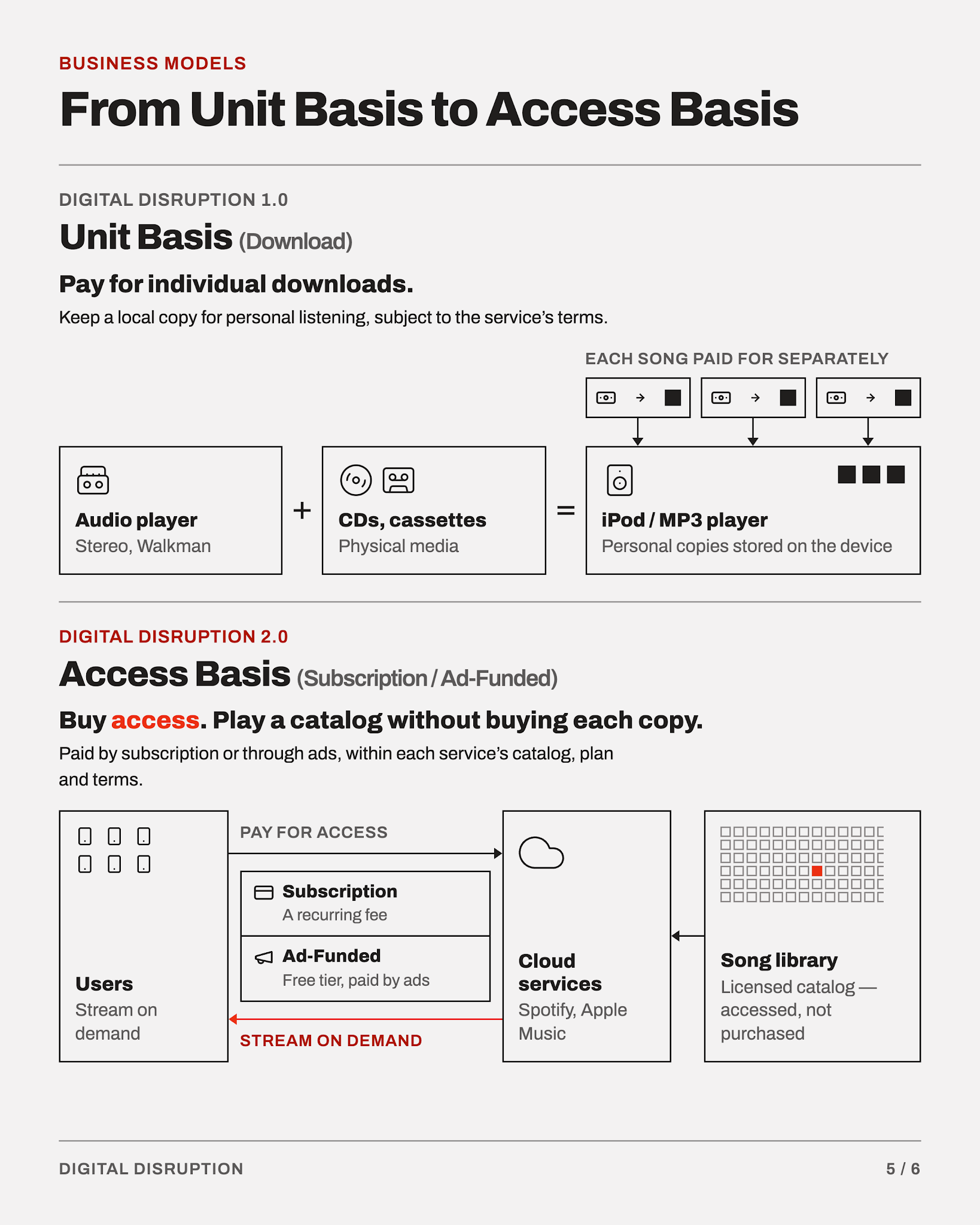
This shift has changed not only how people consume music, but also how musical works generate income.
From Physical Copies to Digital Access
The six panels use “1.0”, “2.0” and “3.0?” as a simplified editorial framework. The periods overlap, and adoption differs across markets. The future column explores possible wider use of immersive formats, not a confirmed next stage.
Digital downloads allowed listeners to obtain files as individual tracks or albums. Physical formats include both analogue media, such as cassettes, and digital media, such as CDs.
Streaming then expanded access without requiring a separate purchase of every recording. Buying copies was never the only way to hear music: radio and live performances also provided access.
Streaming services may offer subscriptions or ad-funded access, depending on the service and plan. Some provide offline downloads within the app. Access remains subject to catalogue availability and service terms.
Rights holders may receive income from different uses, depending on their rights, agreements and reporting. Digital availability alone does not guarantee payment.
So, Where Does Copyright Fit In?
Changes in access do not remove the rights in compositions and recordings. The infographic's access model concerns listening; it does not grant permission to reuse music in a project.
A single musical work can appear across streaming platforms, social media, video content, advertising, films, television, games, and other forms of media.
Every use can involve different rights, parties, permissions, and sources of income.
In Indonesia, copyright arises automatically once a work is expressed in tangible form. It includes moral and economic rights. Government recordation and registration with a publisher are separate administrative processes, not conditions for copyright to arise.
The Challenge: Keep Work Information Accurate
A musical work can involve multiple songwriters, different ownership shares, professional names, publishing arrangements, recordings, and different types of use.
If this information is incomplete or inconsistent, it can make rights administration more difficult.
Metadata can include information such as:
- Song title
- Songwriters and creators
- Songwriter shares
- Lyrics
- Stage names or professional names
- Relevant rights information
- IPI information for relevant creators or rights holders, where assigned
- ISWC for the musical work and ISRC for a recording, where assigned
Accurate metadata supports identification and administration. It does not itself establish ownership or guarantee payment.
Don't Forget the Split
This becomes especially important when a song is written by more than one person.
Before a song moves too far into the release process, the songwriters should agree on their splits.
A split documents the shares being agreed. Specify whether those are ownership shares in the composition, shares of particular income, or interests in a recording; they are not interchangeable.
For example, if three songwriters create a song together, they should have a clear agreement about each person's share.
A split that is only remembered informally can become difficult to manage later, especially when the song starts generating income or receives commercial opportunities.
What About IPI, ISWC and ISRC?
Three identifiers serve different purposes in music administration: IPI, ISWC and ISRC.
They identify different things and do not by themselves prove ownership or permission.
The IPI system identifies interested parties, such as creators and publishers, in rights-management systems. An IPI number identifies a party entry.
ISWC identifies a musical work. ISRC identifies a sound recording or music video recording; it does not identify ownership of the underlying composition.
So, in simple terms:
IPI → interested party. ISWC → musical work.
ISRC → particular recording.
One musical work can have several recordings, each with its own recording identifier as applicable.
Why Should Songwriters Think About This Before Release?
Before a release, songwriters can already make sure that:
- The contributors are correctly identified.
- Splits have been discussed and agreed.
- Song titles are consistent.
- Lyrics and relevant work information are documented.
- Professional names are recorded consistently.
- Relevant identifiers are available where applicable.
- Publishing arrangements are understood.
Where Does a Music Publisher Come In?
A music publisher can help administer musical works within the scope of its publishing agreement.
Depending on the agreement, this can include registering works, maintaining rights information, managing licensing opportunities, administering royalties, and helping ensure that the information connected to the catalogue is properly maintained.
Copyright Is Part of the Music Business
Keep contributor names, agreed shares, titles, lyrics and any assigned identifiers consistent. Confirm which rights each publishing agreement covers before seeking a new use.
Learn More About Music Publishing
Explore Songwriter Overview
References
Indonesian Copyright Law — Articles 1, 9, 64 and 80
IFPI — ISRC and recording ownership
ISWC — Identifying musical works
Sony — The development of the compact disc
Fraunhofer IIS — The development of MP3